



Cybersecurity is reaching an inflection point. The threat landscape is becoming more sophisticated. And faster.
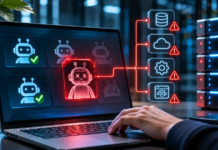
Attackers are increasingly using AI to find vulnerabilities, develop exploits and launch attacks at machine speed. Yet many security organizations are still operating with processes designed around human speed: an alert is generated, an analyst investigates it, a ticket gets created, someone determines what action to take, and another person eventually implements the fix.
At DXC, we’re fundamentally rethinking how we look at the security operations center (SOC). We have removed humans from much of the initial triage process and embraced agentic AI. Now it’s time to introduce agentic capabilities across incident response, moving from human-in-the-loop toward human-on-the-loop and, ultimately, trusted autonomous remediation.
The objective isn’t automation for automation’s sake. It’s speed. The threat has changed, and we believe that security must change with it.
Historically, cybersecurity and IT operations have been closely related but largely independent functions. Security teams identify vulnerabilities or threats. IT teams patch systems or make operational changes. Humans coordinate the handoff.
That works when you have hours, days or weeks to respond. It doesn’t work when adversaries can potentially act in seconds or minutes.
AI gives us an opportunity to close that gap. Agents can identify an exploitable vulnerability, assess the risk and pass instructions through tools and APIs to another agent capable of taking action. The handshake between security and IT operations that once required meetings, emails, tickets and human intervention can increasingly happen at machine speed.
We’re already seeing what this can mean inside the SOC.
DXC is advancing toward agentic triage, dramatically changing the traditional model in which lower-tier analysts spend much of their time reviewing alerts. That experience demonstrates something important: agentic security works. More importantly, it’s showing us where we need to go next.
Triage is only the beginning
Agentic triage can identify a potential problem quickly. But if the next step is simply generating a ticket and waiting for a human to respond, we have automated only part of the problem.
The next frontier is agentic incident response.
As we look to the last quarter of 2026, expanding into agentic threat hunting, agentic threat intelligence response and agentic remediation is clearly the next step.
Imagine an agentic SOC identifying suspicious activity and automatically launching a threat hunt to determine how far an attack may have spread. Or new threat intelligence about a zero-day vulnerability triggering an immediate hunt across the enterprise without waiting for an analyst to initiate it.
Then comes remediation. If the evidence warrants action, an agent could isolate a machine or block a malicious IP address immediately rather than waiting for a human operator. Those are the types of use cases we are developing today.
The same principle applies to vulnerability management. Instead of scanning for vulnerabilities, creating a report and handing it to someone else, agents can increasingly help determine exploitability and eventually initiate remediation. That could fundamentally change the traditional model of giving organizations days or weeks to patch vulnerabilities.
From “human in the loop” to “human on the loop”
None of this means removing human judgment from cybersecurity. It means changing where humans add value.
Human-in-the-loop systems still operate, to some extent, at human speed. That can be appropriate while organizations build confidence in agentic systems or when particularly sensitive actions are involved.
But increasingly, we need to think about humans being on the loop: establishing policies and guardrails, validating performance, monitoring outcomes and intervening when necessary, while allowing trusted systems to act autonomously within defined boundaries.
We need testing. We need reliability. We need continuous validation. And we need guardrails governing what agents can and cannot do. When autonomous systems begin taking “write” actions — changing networks, patching machines or isolating systems — organizations must be confident those actions are safe and appropriate.
There is risk in automation. But I believe the risk of inaction is greater.
Humans move up the value chain
This transformation also changes the role of cybersecurity professionals.
Security teams need to become AI-native, AI-ready and AI-equipped. Technical knowledge remains essential, but curiosity, adaptability and the ability to recognize the art of the possible become even more valuable.
For years, the cybersecurity industry has talked about a talent shortage. Agentic AI gives us an opportunity to approach that problem differently. Instead of continually adding people to perform repetitive, high-volume tasks, we can give those tasks to agents and redeploy talented people toward work requiring judgment, creativity and strategic thinking.
That should be exciting for cybersecurity professionals, not threatening. It creates an opportunity for people at every level to accelerate their careers by learning how to work with AI and lead through change.
For CISOs, the imperative is equally clear: start now. Experiment. Iterate. Build guardrails. Demonstrate value through greater speed, effectiveness and risk reduction. The organizations waiting for every question to be answered before acting are likely to find the threat environment has moved faster than they have.
Cybersecurity has always been a race between attackers and defenders. AI is accelerating that race dramatically.
If adversaries are going to operate at machine speed, defenders must be prepared to do the same.
______
About Mike Baker
Mike Baker is global chief information security officer at DXC Technology. He is an accomplished cyber security executive who brings more than two decades of experience in the field across cyber leadership, talent development, risk management, audit and compliance serving the aerospace and defense industry as CISO along with a variety of clients across industries as a seasoned consultant.
Join our LinkedIn group Information Security Community!