



For years, cybersecurity has been built around one goal: keeping attackers out. Yet in today’s environment, it is no longer a question of if an incident will occur, but when. The organizations best positioned for success are those prepared not only to defend but also to respond and recover quickly.
The Prevention-First Mindset and Its Limitations
Traditional security strategies prioritize controls such as firewalls, multifactor authentication, endpoint protection, and patch management. These measures are essential, but they only reduce risk rather than eliminate it. Today’s threat landscape does not always align with traditional defenses. Compromised credentials, insider activity, misconfigurations, and supply chain weaknesses can all evade even the most advanced protections.
When prevention is the primary focus, many teams find themselves without the visibility or tested processes needed to respond effectively once an attacker gains access. This gap often leads to extended detection and response times that stretch into weeks. The longer the delay, the more opportunity attackers have to escalate privileges, laterally move, and cause significant damage that could be contained with a faster and more coordinated response.
Shifting the Focus Toward Resilience
Resilience in cybersecurity means detecting, containing, and recovering from an incident while keeping business operations running. It does not replace prevention but strengthens it by acknowledging that no system is completely impenetrable.
Organizations that emphasize resilience invest in continuous monitoring, rapid investigation, and coordinated response. Our approach includes dedicated incident response teams, clear playbooks, and regular simulation exercises that help build confidence under pressure. Proper planning is also about making sure teams have access to the right data. Many organizations fall short by not collecting data that’s not only used for alerts, but also for investigations. IBM’s Cost of a Data Breach Report 2025 found that US companies spent an average of $10 million on incidents, with regulatory fines and rising response costs increasing the total impact by nine percent. Those with strong resilience practices were able to reduce these losses significantly.
Recovery planning is just as critical. Secure, accessible backups, predefined restoration steps, and regular testing ensure operations can resume quickly and cleanly. Verifying that backups are uncompromised and available is key to restoring both business continuity and stakeholder trust.
Where Resilience Efforts Fall Short
Even organizations that acknowledge the need for resilience often struggle to put it into practice. Addressing these gaps turns resilience from a theoretical concept into a practical capability that reduces both the cost and duration of an incident.
- Noisy tooling: Monitoring solutions generate enormous volumes of alerts, many of which are never investigated. Attackers often exploit this noise to remain unnoticed. Reducing false positives, fine-tuning alerts, and automating triage can help security teams respond faster to the signals that matter most.
- Missing information: Missing or lacking visibility into an organization’s environment can mean the difference between detecting a threat actor and letting them slip by undetected. To ensure resilience, it’s crucial to gather enough information from all available sources.
- Unpracticed response plans: An incident response plan is only as strong as the practice behind it. Without regular simulations, teams may find that responsibilities are unclear or critical steps are missing. Every department, from technical staff to legal, communications, and executive leadership, must understand its role in managing an incident. Running exercises throughout the year ensures that responsibilities are clearly defined, gaps are uncovered, and all stakeholders are ready to act quickly and effectively when needed.
Moving Beyond Prevention to a Balanced Mindset
Building resilience demands a shift in perspective. Security success can no longer be measured only by how well attacks are prevented. The true test is how quickly and effectively an organization detects and recovers when prevention fails. A balanced strategy directs investment not just toward defense but also toward detection, response, and recovery. It also introduces new success metrics such as mean time to detect and mean time to recover, which reflect the speed and efficiency of a security program.
By elevating resilience to the same level as prevention, organizations strengthen their ability to operate confidently in a threat landscape where incidents are inevitable. Prevention reduces risk, but resilience ensures that when incidents occur, their impact is contained, and operations can continue.
Resilience as a Strategic Advantage
The increasing sophistication of attackers, combined with insider risks and supply chain exposures, has made incidents unavoidable. The organizations that will succeed are those that prepare for this reality and integrate resilience into their core strategy.
Investing in detection, response, and recovery not only reduces the financial and operational impact of incidents but also preserves customer trust and brand reputation. Companies with mature resilience practices consistently recover faster and with less disruption than their peers.
Prevention will always be necessary, but resilience defines how well an organization weathers the challenges it cannot stop. Resilience is a strategic advantage that separates organizations that merely survive from those that continue to thrive.
___
BIO:
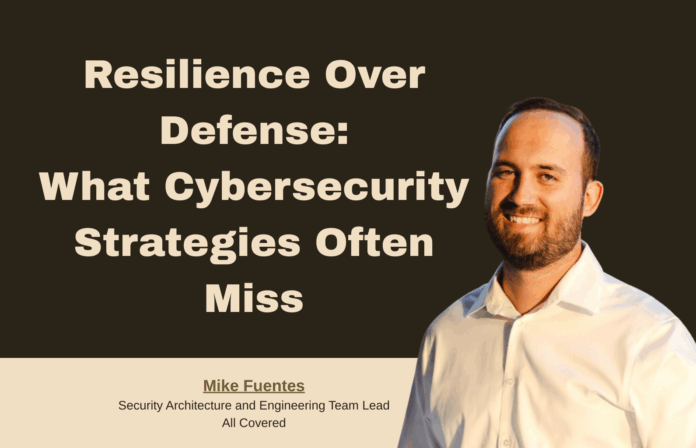
Michael Fuentes is a CISSP-certified Security Architecture and Engineering Team Lead with expertise in automation, security architecture, and managed security services. He has led initiatives in SOAR, endpoint security, and dark web monitoring to help organizations strengthen their defenses.
Join our LinkedIn group Information Security Community!