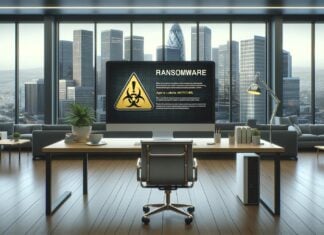




Ransomware attacks have become a major concern for businesses and organizations worldwide. Law enforcement agencies consistently urge victims not to pay the ransom demanded by cybercriminals, as doing so only fuels further criminal activity and offers no guarantees of actually receiving a working decryption key. The risk remains that paying may not resolve the issue and could simply lead to more extortion.
However, a study conducted by insurance firm Hiscox presents a stark contrast to this recommendation. According to the firm’s findings, 80% of organizations that fall victim to ransomware attacks ultimately opt to pay the hackers. For many, this decision is driven by the desire to quickly regain access to sensitive data that has been locked behind encryption. Recovering data from backups, while the safer route, can often be more time-consuming and costly, especially when backups are incomplete or unavailable.
The Hiscox Annual Cyber Readiness Report was released amid a ransomware crisis that impacted a number of well-known companies, including Marks & Spencer, Co-Op, and Jaguar Land Rover (JLR). In response to the attack that crippled JLR, the British government intervened, injecting approximately $2 billion to rescue the automotive giant from the brink of collapse. This highlights the magnitude of ransomware attacks on major enterprises, and underscores the severe financial implications of such cyber incidents.
Hiscox’s survey sheds light on some startling statistics. Over the past year, more than 30% of the 5,700 small and medium-sized businesses (SMBs) surveyed reported being victims of ransomware attacks. Of these, a significant 80% chose to pay the ransom, with the vast majority of payments made in cryptocurrency, a common method due to its anonymity. However, paying the ransom doesn’t always guarantee a full recovery. The survey revealed that only 60% of those who paid the ransom were able to restore all of their encrypted data. The remaining 40% either faced additional demands for more money or received a decryption key that failed to unlock all of their files.
The situation is further complicated by the rise of artificial intelligence (AI) in cyberattacks. Hiscox’s survey revealed that more than 60% of companies blamed AI-based tools for making them more vulnerable to ransomware. The use of AI by cybercriminals allows them to deploy increasingly sophisticated attack strategies, leaving traditional defense mechanisms struggling to keep pace. In fact, half of the organizations surveyed reported facing substantial penalties for failing to adequately protect their data from these advanced threats.
The conclusion of the report paints a grim picture for businesses under the threat of file-encrypting malware. The effects of a ransomware attack extend far beyond immediate operational disruptions. For many companies, the long-term damage to their reputation, finances, and even their ability to remain operational can be catastrophic. In an era where cyber threats are constantly evolving, companies must prioritize robust cybersecurity measures, including both preventative and recovery strategies, to avoid falling victim to these devastating attacks.
Join our LinkedIn group Information Security Community!