


On-demand webinarNetwork Security and Zero Trust
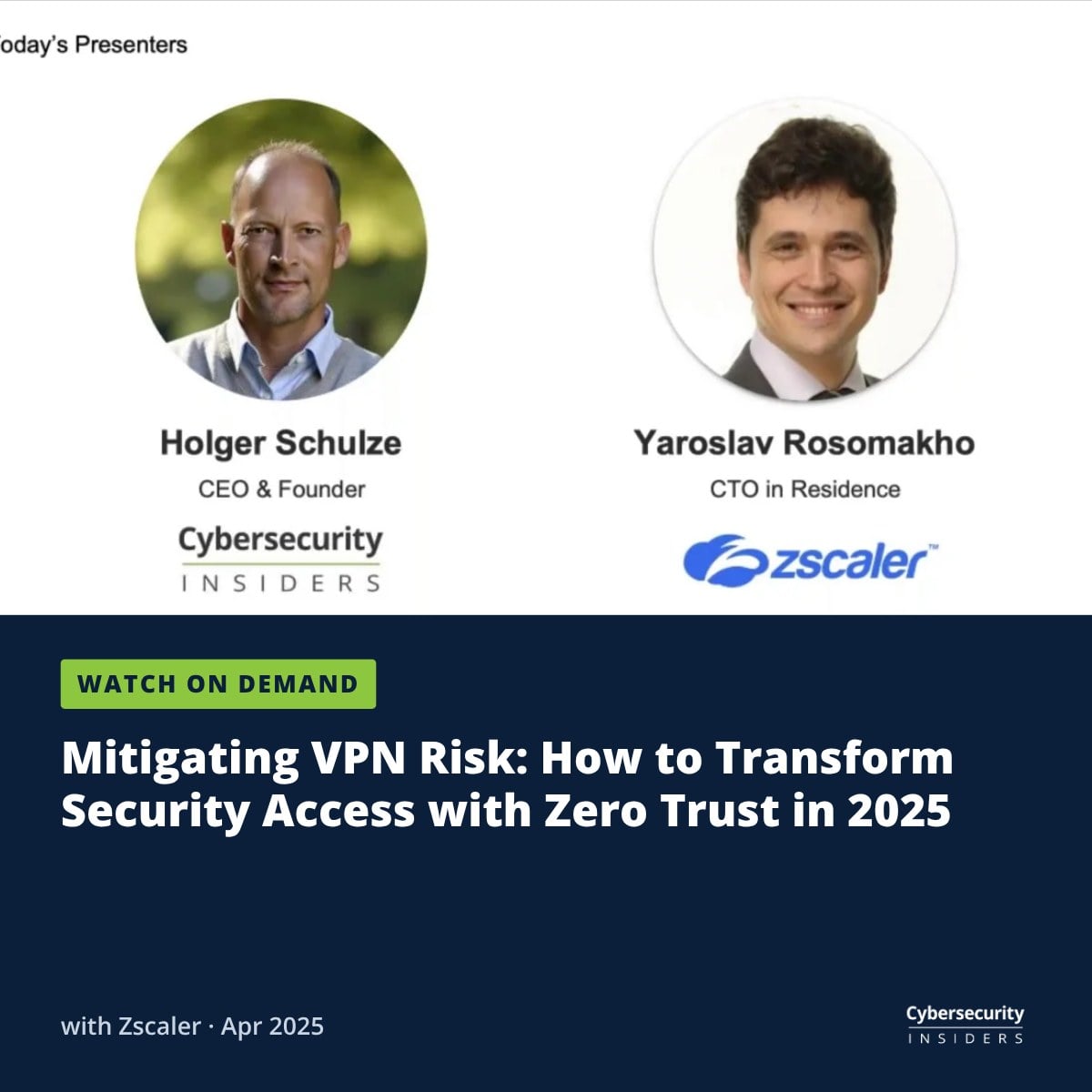
Mitigating VPN Risk: How to Transform Security Access with Zero Trust in 2025
About this webinar
Zscaler and Cybersecurity Insiders present findings from the Zscaler ThreatLabz 2025 VPN Risk Report, which found 76% of organizations concerned about ransomware targeting unpatched VPN vulnerabilities and 71% worried about attackers using VPNs to move laterally. The session examines how attackers exploit VPNs to breach networks and evade detection, why 93% see third-party VPN access as a major risk, and how Zero Trust Network Access removes the VPN attack surface. It closes with best practices for moving to a cloud-delivered zero trust model.
Topics:Network Security and Zero Trust
What this session covers
- The latest VPN security risks and attack trends targeting enterprises – 76% of organizations fear ransomware attacks via unpatched VPN vulnerabilities, making them a prime target for cybercriminals
- How attackers exploit VPNs to breach organizations, spread ransomware, and evade detection – VPNs provide an open pathway for lateral movement, a top concern for 71% of security leaders
- Why third-party VPN access remains a critical security weakness – 93% of organizations say third-party VPN access poses a major security risk, increasing the likelihood of supply chain attacks
- How Zero Trust Network Access (ZTNA) eliminates VPN attack surfaces and prevents lateral movement – A modern approach enforces least privilege access, ensuring users and devices only access what they need
- Best practices for transitioning from VPNs to a cloud-delivered zero trust model – Learn how enterprises are securing remote access while reducing risk and complexity
Speakers
 Holger SchulzeFounder and Lead Analyst, Cybersecurity Insiders
 Yaroslav RosomakhoCTO in Residence, Zscaler
More research with Zscaler
Reports, guides, reviews and webinars Zscaler has produced with Cybersecurity Insiders.
More webinars on Network Security and Zero Trust
All 31 Network Security and Zero Trust webinars → Network Security and Zero TrustZero Trust in the Age of AI: How Far Can Your AI Agents Reach?with HPE · Oct 2026Watch on demand →
 Network Security and Zero TrustThe Trust Fall: Why zero trust is the security safety net from edge to cloudwith HPE · Oct 2025Watch on demand →
 Network Security and Zero TrustThe VPN Exit Plan: Your Roadmap to Zero Trust Securitywith HPE · Jul 2025Watch on demand →