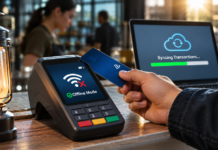



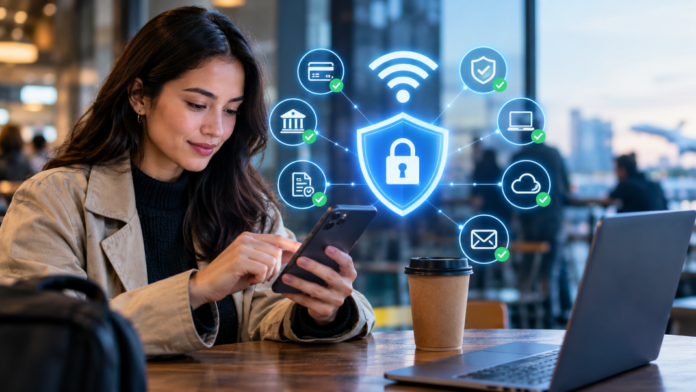
The convenience of staying connected on the go has created a culture where Brits frequently trade digital security for internet access. According to recent research from Compare the Market, two in three Brits use public WiFi when away from their home, logging onto shared networks in cafes, trains, and hotels without a second thought.
How Brits are using public WiFi on the move
While a private, password-protected home network is one of the safest places to log onto online banking, make purchases, or manage sensitive data, many Brits conduct these transactions on the move. The data reveals that 23% of adults use public WiFi to shop online, 13% use it for work, and one in five (20%) use it for online banking, a figure that rises to 27% among 25- to 34-year-olds.
When away from home, it is crucial to remember that your digital assets can be just as exposed as your physical ones. People rightfully invest time and money in securing their property through home security systems; however, connecting to an unfamiliar public network introduces extra risks that many Brits remain unaware of:
- 20% admit they take no security precautions before connecting to a public network
- 16% state they would not know what to look for when deciding whether a network is suspicious
- Only 21% regularly use a Virtual Private Network (VPN)
This lack of awareness leaves users potentially exposed. There are examples such as man-in-the-middle attacks (where cybercriminals intercept personal details in transit), as well as fake hotspots (where rogue networks mimic legitimate WiFi networks to trick people into connecting). And the threat remains present, with the ONS estimating around 798,000 computer misuse incidents in England and Wales in the year ending March 2026.
8 Steps to stay safe on public WiFi
Public WiFi can be incredibly useful when travelling, commuting, or working away from home, but not every network you see is legitimate. Before you log on to perform sensitive tasks, taking a few proactive precautions is essential.
In collaboration with Compare the Market’s broadband expert Matthew Brewer, here are eight tips to stay secure online, away from home:
- Check the network name: Don’t automatically connect to the strongest or most obvious network. Confirm the official name with staff at the cafe, hotel, airport or whatever venue you are in.
- Be wary of automatic connections: Review your device’s WiFi settings and consider switching off automatic connection to unfamiliar networks.
- Check for HTTPS: Before entering sensitive information online, check that the URL starts with https:// , which encrypts your data in transit. Remember that while https:// protects what you send, a fake network can still try to steer you towards convincing clone sites. Check the web address carefully to confirm it’s legitimate and never bypass or click through browser certificate warnings.
- Consider a VPN: A VPN can provide an additional layer of protection when using public networks, particularly if you’re working remotely or travelling. Ensure you choose a reputable paid VPN provider, as some free VPNs can harvest your data.
- Think twice before banking or shopping: If you’re connected to an unfamiliar or untrusted network, avoid banking, entering payment details or accessing particularly sensitive information until you are back on a secure home connection. If it cannot wait, a sensible alternative is to turn off WiFi and use your phone’s 4G/5G mobile data or a personal hotspot.
- Enable multi-factor authentication (MFA): Ensure two-step verification is turned on for online banking, email, and shopping accounts. In the event that someone intercepts your password or login details on a public network, MFA makes it much harder for them to access your accounts without that second verification prompt on your personal device.
- Don’t forget your home WiFi: While a home network is generally more controllable than a public one, good security habits still matter. Using a strong and unique WiFi password, keeping your router firmware and connected devices up to date and checking which devices are connected can all help keep your home network secure.
- Keep your device updated: Regularly update your phone, tablet or laptop, as software updates often include important security fixes alongside other improvements.
- Remember a safe connection doesn’t stop a scam: Even on a network you trust, scammers rely on fake shops, lookalike adverts and impersonation. In a separate Compare the Market survey of 2,000 UK adults, 30% of those who had been scammed said it began with clicking an advert or link. Before you buy, double-check the web address, and be wary of anything that feels urgent.
Commenting on online shopping scams, Charlie Evans, Personal Finance Expert at Compare the Market, states: “Scammers often take advantage of busy shopping periods by creating fake websites and social ads that closely resemble trusted brands, making it all too easy to be tempted by deals that aren’t what they seem. Before you buy, take a moment to double-check the web address.”
Matthew Brewer says, “The aim isn’t to make people nervous about using public WiFi. It’s about making a few simple checks part of your normal routine. If you’re unsure about a network, switching to mobile data for anything particularly sensitive can be the simplest option.”
Ultimately, the modern world requires us to stay connected on the move and so public connections are an inevitable part of everyday life. However, an open network doesn’t have to mean an open door to cybercriminals. Remaining vigilant and taking precautions is the best way to browse on the move with genuine peace of mind.
About Matthew and Charlie
 Matthew Brewer is a Broadband and Mobile Expert at Compare the Market, bringing over 12 years of digital experience. He is available for expert commentary across consumer and industry media, helping UK households find reliable, value-driven packages.
 Charlie Evans is a Personal Finance Expert at Compare the Market, bringing over 10 years of experience across the UK’s leading personal-finance and comparison platforms. He is available for expert commentary across consumer and industry media, offering actionable advice to help UK consumers protect their finances, cut everyday expenses, and make confident financial decisions.
Methodology
Survey conducted by Censuswide on behalf of Compare the Market between 3 July and 9 July 2026 among a nationally representative sample of 3,000 UK adults. The study examined public WiFi usage, network security awareness, and common digital habits on the go.
A separate Censuswide survey of 2,000 UK adults was conducted between 29 and 31 October 2025. Its figures reflect self-reported experiences of financial scams rather than recorded incident data.
The survey findings were analysed to inform the data and tips featured in this article.
Join our LinkedIn group Information Security Community!