



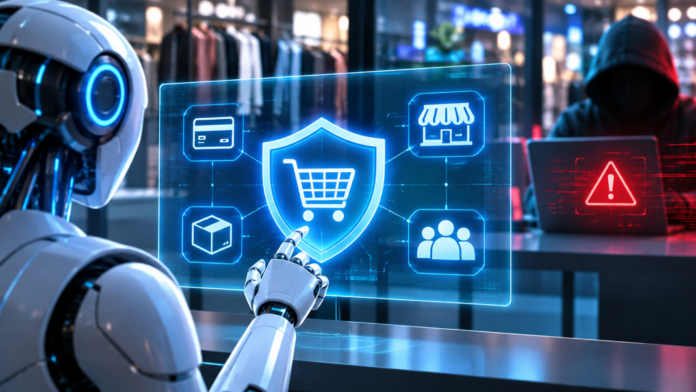
A string of cyber incidents has put retailers firmly in the crosshairs of cybercriminals. Most recently, hackers have targeted supermarkets across Europe, manipulating refrigeration systems and causing food to spoil.
These incidents show just how disruptive cyberattacks can be. Payment systems can go down, online orders can grind to a halt and deliveries can be delayed. Even a few hours of disruption can seriously affect sales and customer trust. And with cybercriminals increasingly using artificial intelligence (AI) to find weaknesses and launch attacks faster, the pressure on retailers to keep up is growing.
But AI can also be one of retailers’ strongest defences, helping security teams spot attacks earlier, limit the damage when hackers get through and get operations back up and running faster.
Spotting threats before they escalate
As retailers have expanded their digital operations, they’ve added more systems and security tools to protect everything from online shopping platforms and payment terminals to customer databases and warehouses. Each generates its own alerts, leaving security teams with enormous amounts of information to sift through, making it difficult to understand which threats require urgent attention.
The trouble is, cyberattacks rarely come with one obvious warning sign. Hackers can move between connected systems, exploiting weaknesses that might seem harmless on their own. This is where AI can help. By analysing activity across different systems, it can pick up on unusual behaviour and connect warning signs that a human analyst might miss.
For example, an employee logging in at an unusual hour might not raise alarm bells on its own. But if that same account then starts downloading large volumes of customer records or accessing systems it wouldn’t normally use, it could point to something more serious. AI can help security teams connect these warning signs and distinguish genuine threats from harmless activity.
Stopping attacks without stopping business
Spotting a threat early is important, but what happens next matters just as much. When hackers get into a retailer’s systems, the instinct might be to shut down anything that could be compromised. However, an overly aggressive response can sometimes create problems of its own.
Imagine a retailer disconnecting an entire network to stop an attack spreading, only to find that stores can no longer process payments or customers can’t place orders online. The business might have contained the threat, but at a significant operational cost. Retailers therefore need to be more precise about how they respond, understanding which systems are affected and which services need to keep running.
AI can help security teams make these decisions faster by analysing how systems are connected and identifying where an attacker may have gained access. Instead of shutting everything down, teams can take more targeted action, such as restricting a compromised account or isolating part of the network while keeping other services running.
Of course, there’s a balance to strike. Decisions that could disrupt payments, deliveries or other essential services still need human oversight, with AI helping teams respond more quickly and confidently under pressure.
Getting back to business faster
Even when an attack has been contained, getting everything back up and running can be a challenge in itself. Restoring systems is often complicated, particularly when retailers are dealing with multiple interconnected platforms and need to work out which services to bring back online first. Yet recovery remains one of the most overlooked parts of cybersecurity planning.
Most businesses will have backups of their important systems and data. But having a backup and knowing it will actually work when needed are two very different things. Cybercriminals are increasingly targeting backups themselves, encrypting or deleting them to make recovery harder. AI can help retailers prepare by supporting checks on backup integrity, identifying dependencies between systems and helping teams work out what needs restoring first.
For example, getting payment systems and online shopping platforms running again will often be more urgent than restoring internal reporting tools. AI can help teams prioritise based on what’s most important to keeping the business operating. But retailers shouldn’t wait until an attack to find out whether their recovery plans work. Regular testing, protected backups and clear responsibilities are essential.
Preparing for the intelligent disruption ahead
As AI lowers the barrier to entry for less skilled attackers, retailers need to look beyond how many attacks they’ve prevented and focus on how quickly they can respond and recover when things go wrong. AI can make a real difference, but it needs to be backed by clear recovery plans and human oversight.
Ultimately, retailers can’t prevent every attack, but they can make sure they’re prepared to limit the damage and get back to business as quickly as possible.
________
About Mahesh Wale
Mahesh Wale is UK&I Business Unit Head for Retail, Consumer Goods, Travel, Hospitality, and Life Sciences at Cognizant. He leads the strategy, growth and delivery of Cognizant’s business across these industries, helping organisations use AI, data and emerging technologies to improve business performance and customer experience. With more than 25 years at Cognizant, Mahesh is a trusted adviser to C-suite leaders, supporting organisations as they modernise operations, accelerate innovation and deliver long-term growth.
Join our LinkedIn group Information Security Community!