





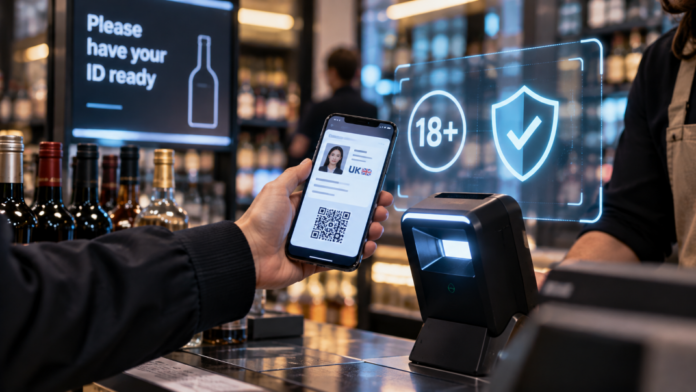
The decision allowing digital IDs for alcohol age checks in England and Wales marks a practical milestone in how digital credentials integrate into everyday transactions. As of 15th September, licensed venues and retailers can now accept digital proof of age through certified third-party verification providers.
For CISOs, risk officers, and IT leaders, this shift offers a real-world case study for the transition to decentralised identity and zero-trust architectures. The Home Office guidance contains a vital detail that many commentators missed: venue staff cannot simply look at a phone screen. A visual check of an app or screenshot is not legally compliant; the verification must occur programmatically between the merchant’s point-of-sale (POS) system and a registered digital verification provider.
This requirement changes the risk calculus for customer identity, API security, and data minimisation. As digital identity becomes more closely integrated into everyday transactions, convenience will need to be balanced with strong privacy and security measures, while ensuring consumers retain autonomy over how they verify their identity.
The transition towards a digital-first society
The move towards digital ID for alcohol sales reflects the wider transition to a digital-first society. For example, Estonia’s ID-card, which is used by 99% of residents and is widely considered the biggest digital ID success in the world, demonstrates how digital credentials can become embedded in everyday services.
However, the UK will need to overcome a more cautious public attitude towards government-held data and how it is stored and used. As we look to follow countries like Estonia, privacy, security and accessibility will become more important than ever, particularly around what information businesses can access and how to ensure those who don’t use digital credentials are not excluded. The wider use of digital identities also creates new cyber risks, including identity theft, credential compromise and attacks on the systems that store or verify people’s identities, making robust security measures essential as adoption grows.
Convenience cannot come at the expense of privacy
As more of our identities move into the digital world, digital credentials should reduce the amount of personal information we expose, not create new ways for it to be compromised. For example, a stolen credential, compromised device or attack on an identity provider could allow criminals to impersonate someone and gain access to services or personal information. Digital age verification must be designed to prove that someone is old enough to buy alcohol without requiring them to share more personal information than necessary. A decentralised identity model would support this by allowing people to store verified credentials securely in a digital wallet, rather than relying on a centralised ‘honeypot’ of sensitive information.
As the government pivots towards enabling digital ID use through third-party verification services, building consumer trust will depend on strong safeguards and transparency. Digital identity might not be taking the form of one comprehensive government system for the foreseeable future, but is becoming embedded into the UK’s processes, transaction by transaction. With that, consumers need to feel as though they aren’t being forced into digital ID adoption, but that digitalising identity will help, rather than hinder them.
The use of digital ID must remain a choice
Digital credential adoption can’t come at the cost of inclusion, particularly for those people who cannot – or choose not to – rely on their phone to prove their age. There must be an additional option for accessing age-restricted goods and services, rather than digital being the only route. Maintaining a choice between digital and physical forms of ID will help to ensure that those without smartphones, including the older population, and those who prefer offline alternatives, are not excluded. Giving consumers that choice can also help build trust, allowing digital identity to gain popularity because it is useful and can be trusted, rather than people feeling as though the government is forcing them into using it.
Getting the balance right
Digital identity is becoming part of everyday life; the priority now is to ensure this shift happens on terms that consumers can trust, with strong privacy and security safeguards, greater control over personal data and physical ID remaining an option for those who need or prefer it. Digital identity is not going away, so the focus should be on building a model that delivers greater convenience without compromising choice or trust.
Join our LinkedIn group Information Security Community!