


A CISO's Guide to Preserving Availability, Integrity, and Trust
Securing the Modern Mainframe helps CISOs detect attacks on the system of record early, limit their reach and restore operations with trusted transactions. The guide covers the structural breakdowns behind mainframe attacks, three pillars of resilience (detect, govern, recover), three readiness tests, key metrics and a phased roadmap.
3–6
months attackers often spend on quiet reconnaissance before they encrypt anything
6
structural breakdowns that recur across mainframe attacks, from invisible telemetry to new access paths
90
days in the guide's roadmap: establish visibility, introduce guardrails, validate resilience
Attacks on the mainframe rarely start there. They begin with phishing, stolen credentials or abused integrations, and once inside, attackers work within existing permissions, so their activity looks legitimate to traditional access controls. Because the mainframe is often the system of record for payments, claims and orders, a successful attack quickly turns into a question of which transactions can still be trusted. The long reconnaissance phase before encryption gives security teams a window to spot abnormal behavior, if mainframe telemetry reaches the SOC in time. The guide shows CISOs how to use that window and how to recover operations with confidence when an attack gets through.
Inside the guide:
- Why mainframe security has changed: hybrid integrations, shared identity and AI-connected services that extend trust
- The structural breakdowns that let attackers operate undetected, from invisible telemetry to modernization paths
- Three pillars of mainframe resilience: detect threats early, govern access continuously, recover in a trusted state
- A recovery sequence showing how detection, containment and transaction replay restore operations in under two hours
- Three readiness tests for recovery, visibility and governance, and the friction that keeps blind spots in place
- Metrics that matter, a phased roadmap for the first quarter and three tactics for building internal support
What the guide recommends
The guide sets out how CISOs can preserve availability, integrity and trust on the system of record.
- Bring mainframe telemetry into the SOC
- Mainframe telemetry should reach the SOC in near real time alongside distributed events. Detection then focuses on behavior such as reconnaissance, bulk data activity and misuse of legitimate credentials.
- Make privileged access time-bound
- Standing privilege is standing risk. Time-bound access with automatic expiration limits what an attacker inherits from a stolen credential.
- Govern non-human identities
- Batch and service accounts, API identities and certificates need at least the same rigor as users, since they carry broader access with less scrutiny.
- Protect the path to trusted recovery
- Immutable backups and isolated transaction logs let teams restore from a known-good point and replay every legitimate transaction up to the attack.
- Start with visibility
- Visibility is the least disruptive first step. A non-invasive first phase builds trust with mainframe teams before access governance changes.
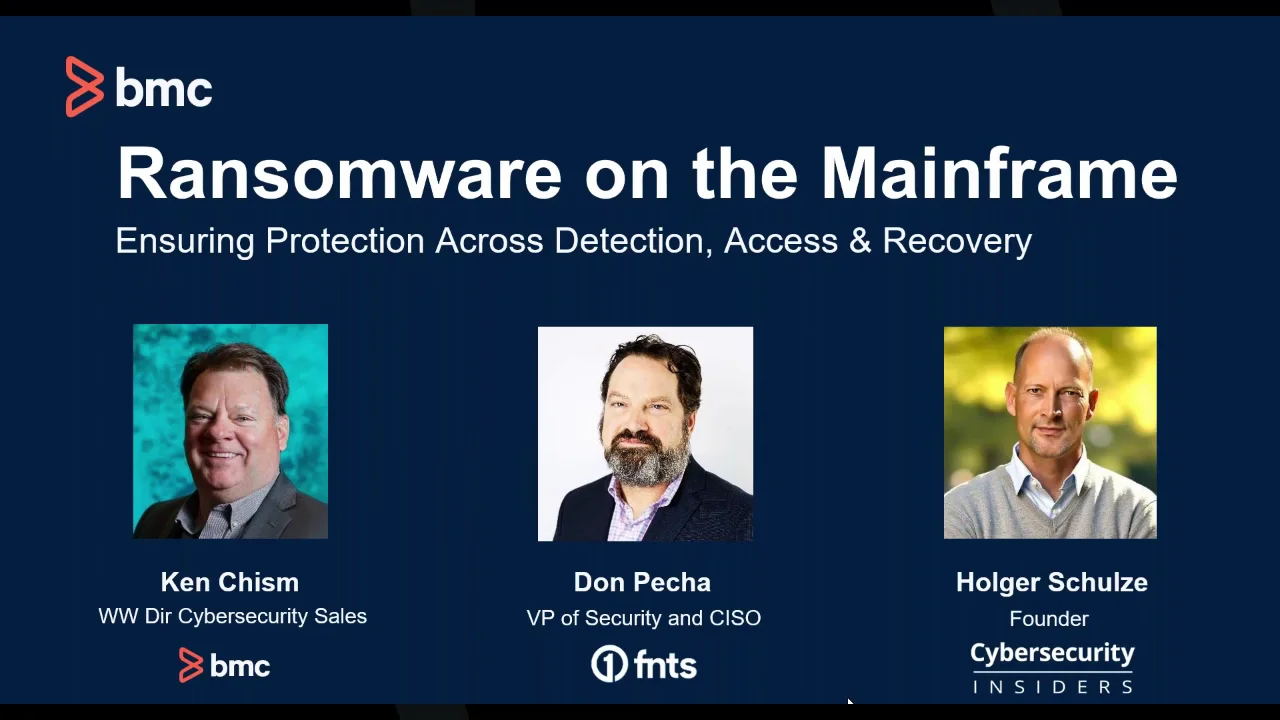
More recent research
The latest reports, CISO guides and product reviews from Cybersecurity Insiders.

More research on Security Operations
Reports, guides and reviews on this topic from other research partners of Cybersecurity Insiders.

2026 Insider Risk Report
Survey report with Gurucul
Abstract Security
Product review with Abstract Security
2025 Pulse of the AI SOC Report
Survey report with Gurucul
2025 Insider Risk Report
Survey report with Cogility
Intezer's Autonomous SOC Platform
Product review with Intezer Labs
Commission a guide like this
Cybersecurity Insiders writes and publishes practical CISO guides with security vendors.
See how CISO guides workSubscribe to
Cybersecurity Insiders
Get new research reports, CISO guides and product reviews delivered to your inbox.
SubscribeResearch library
Practitioner surveys, CISO guides, product reviews and webinars
Browse the research libraryGet a CISO guide for your company
Cybersecurity Insiders writes and publishes practical CISO guides with security vendors. Cybersecurity Insiders runs the whole project, from outline and drafting to the finished guide and its promotion to a community of more than 600,000 security professionals.