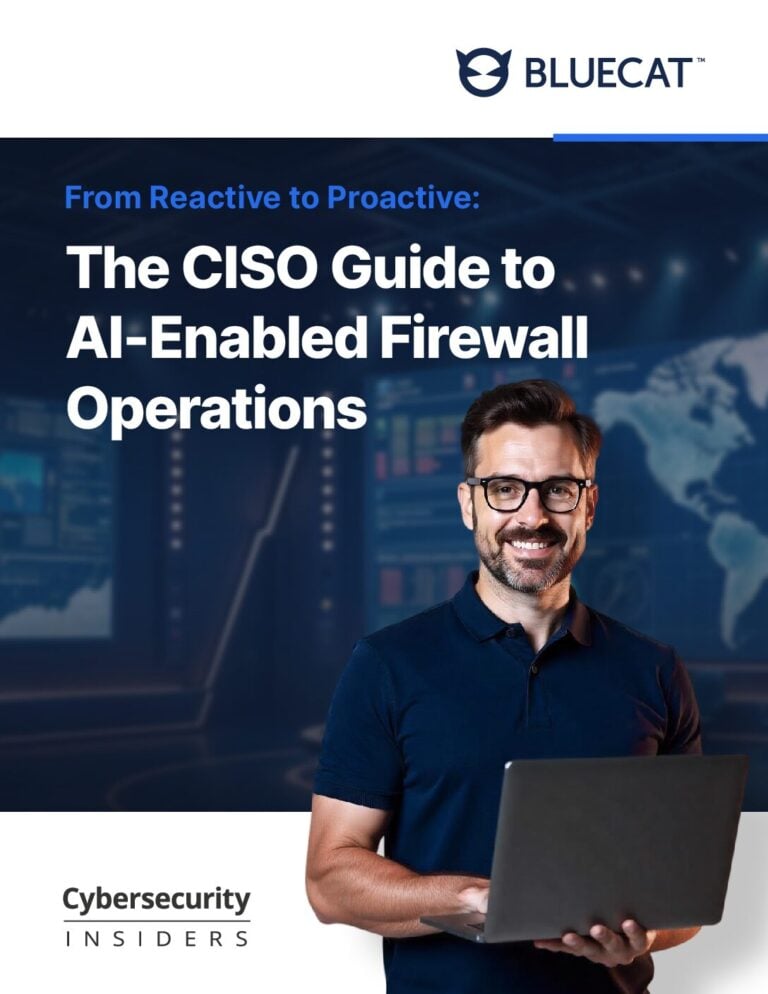



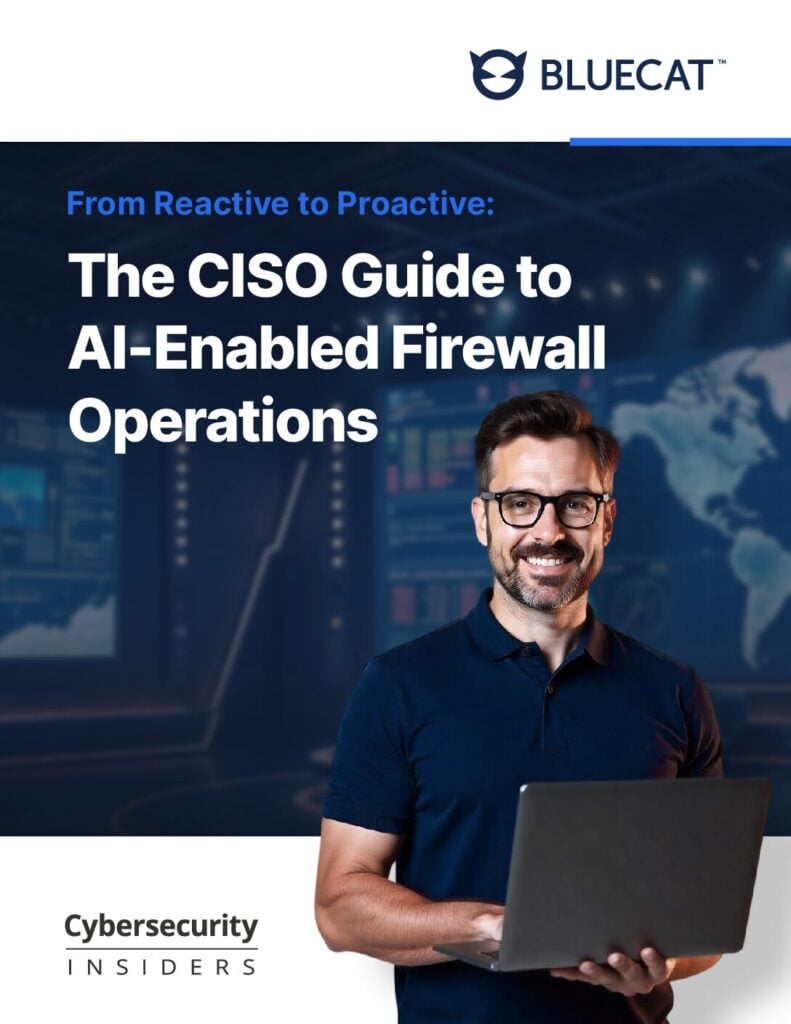
From Reactive to Proactive Operations
The CISO Guide to AI-Enabled Firewall Operations helps CISOs move firewall and network operations from reactive troubleshooting to proactive, AI-enabled observability. The guide covers the limits of traditional firewall monitoring, the core components of proactive observability, how BlueCat LiveAssurance applies them, real-world examples, a five-step implementation roadmap and self-assessment questions.
5
common blind spots of legacy monitoring, from configuration drift to multi-vendor inconsistencies
11
observability categories in the evaluation checklist, from system resources to cloud integration
18
self-assessment questions to test whether current monitoring is ready for proactive observability
Most enterprise networks still rely on SNMP-based or up/down monitoring that confirms a device is running but says little about whether it is configured and performing correctly. Configuration drift, outdated firmware, open ports and devices running near capacity go unnoticed until they cause outages, security incidents or compliance violations. Multi-vendor estates add mismatched policies across clusters that weaken redundancy. Proactive observability analyzes telemetry continuously, correlates behavior across network layers and recommends fixes before problems escalate. The guide shows CISOs what that approach requires and how to adopt it without disrupting operations.
Inside the guide:
- The case for proactive firewall operations and why reactive monitoring leads to downtime and compliance gaps
- The limits of traditional monitoring: configuration drift, hidden vulnerabilities, bottlenecks and anomalies
- Core components of proactive observability: anomaly detection, AI-enabled decision support and automation
- How BlueCat LiveAssurance works across firewalls and DDI systems, in five stages
- Real-world examples from a global airline, a large retailer and a credit card processor
- A five-step implementation roadmap, self-assessment questions and an observability evaluation checklist
What the guide recommends
The guide sets out how CISOs can move firewall operations from reactive to proactive.
- Assess monitoring gaps first
- Audit existing tools to find where they miss configuration drift, hidden vulnerabilities and performance bottlenecks.
- Set measurable goals
- Tie the move to targets such as less downtime, faster resolution and full compliance, aligned with business priorities.
- Demand multi-vendor coverage
- Choose a platform that covers firewalls from different vendors and offers anomaly detection and automated remediation workflows.
- Roll out in phases
- Pilot on critical systems such as DNS servers or a firewall cluster, refine thresholds and workflows, then scale.
- Build a prevention culture
- Train teams, standardize workflows for drift and policy misalignment, and shift from firefighting to prevention.
More research with BlueCat
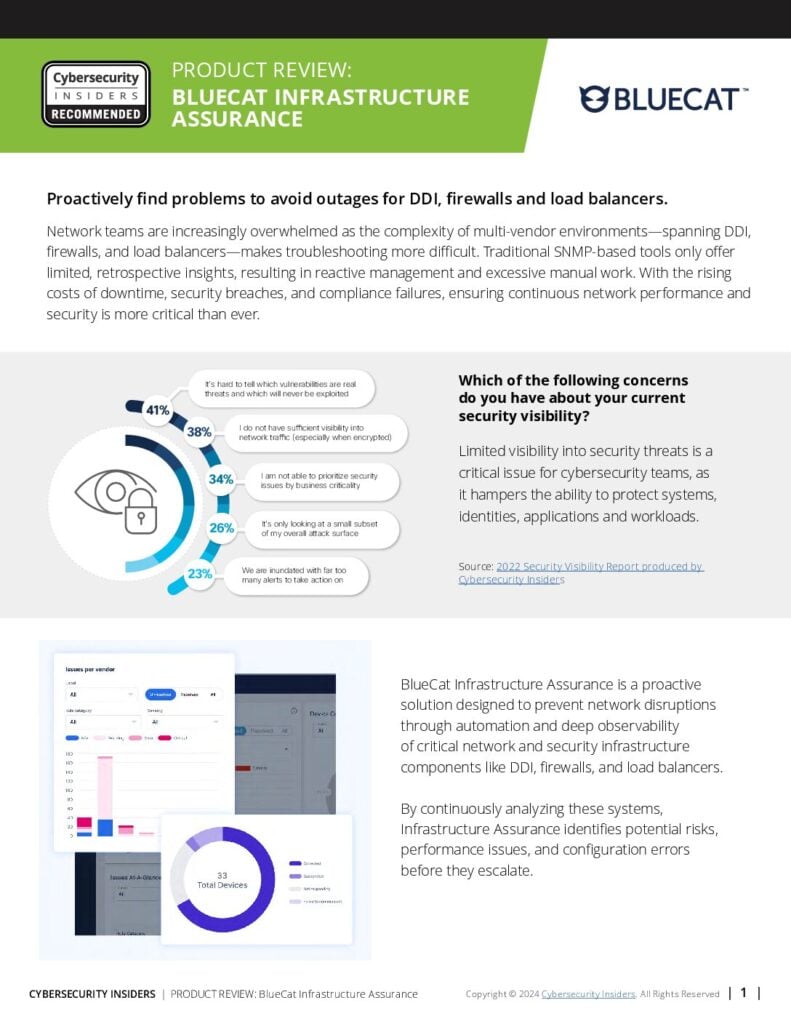
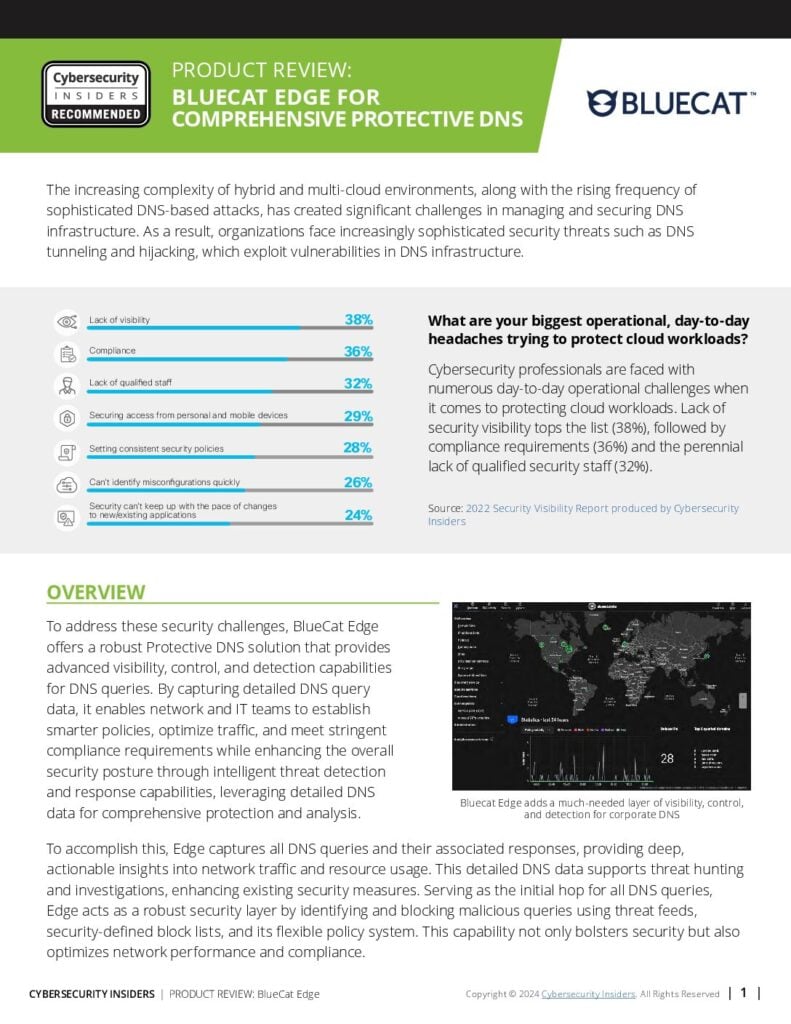
Reports, guides, reviews and webinars BlueCat has produced with Cybersecurity Insiders.
More research on Network Security and Zero Trust
Reports, guides and reviews on this topic from other research partners of Cybersecurity Insiders.
Safous Privileged Remote Access
Product review with Safous
The CISO Guide to Hybrid Mesh Firewall
CISO guide with Hewlett Packard Enterprise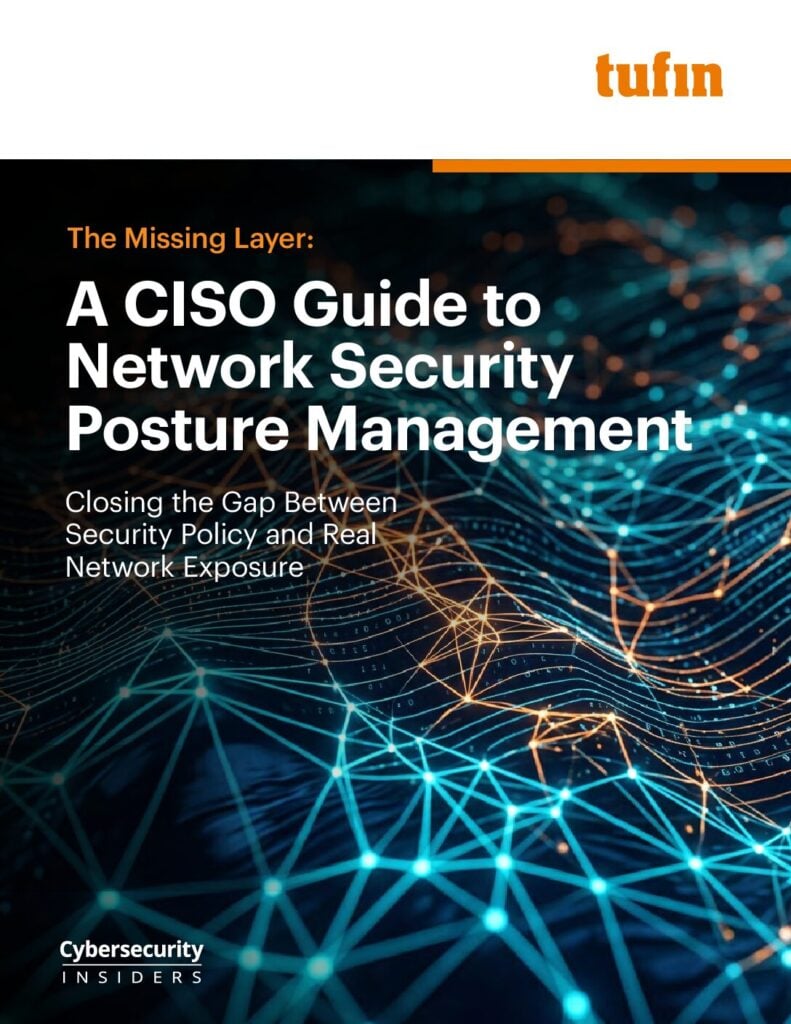
A CISO Guide to Network Security Posture Management
CISO guide with Tufin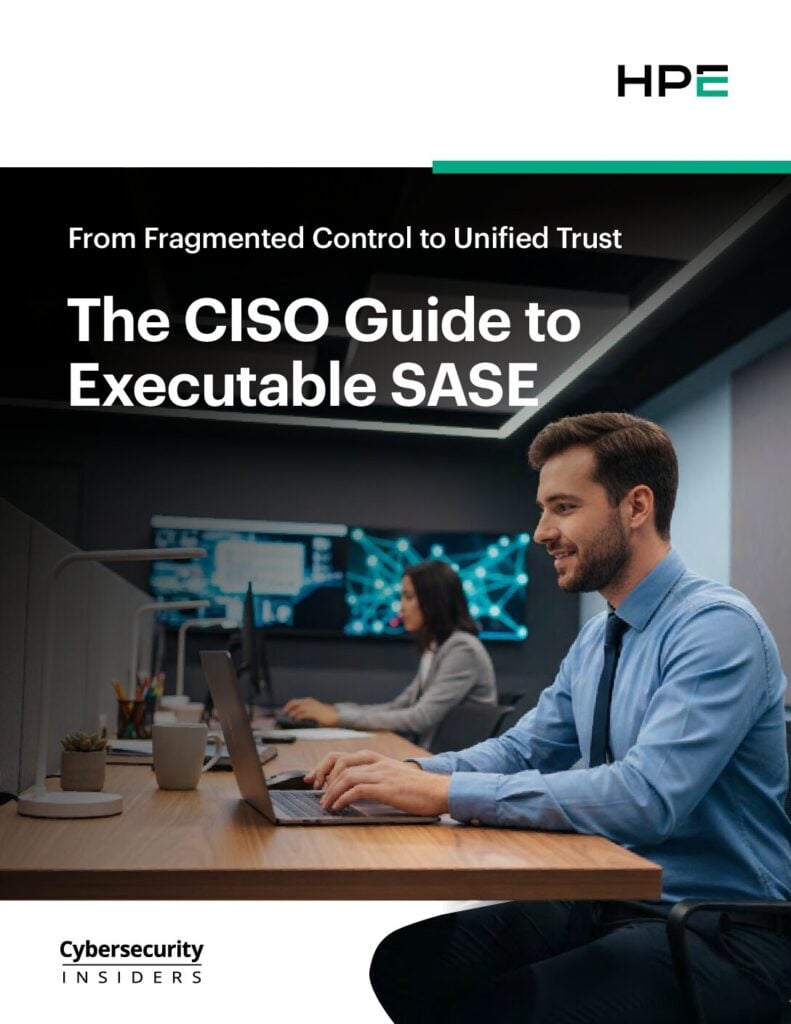
The CISO Guide to Executable SASE
CISO guide with Hewlett Packard Enterprise
2026 VPN Risk Report
Survey report with Zscaler
Commission a guide like this
Cybersecurity Insiders writes and publishes practical CISO guides with security vendors.
See how CISO guides workSubscribe to
Cybersecurity Insiders
Get new research reports, CISO guides and product reviews delivered to your inbox.
SubscribeResearch library
Practitioner surveys, CISO guides, product reviews and webinars
Browse the research libraryGet a CISO guide for your company
Cybersecurity Insiders writes and publishes practical CISO guides with security vendors. Cybersecurity Insiders runs the whole project, from outline and drafting to the finished guide and its promotion to a community of more than 600,000 security professionals.