

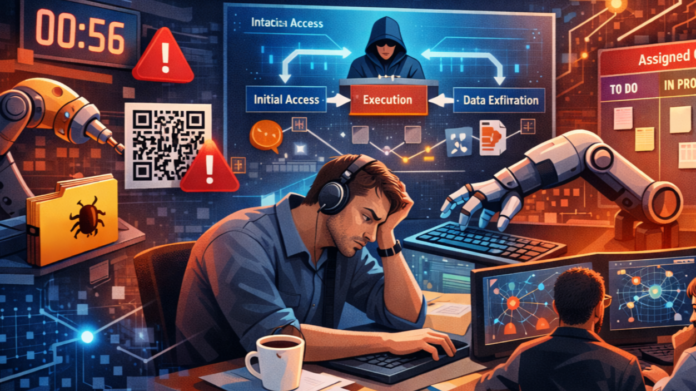
Alert fatigue isn’t just a workflow problem anymore. When analysts face hundreds of alerts each day, focus slips, decisions slow down, and real threats become easier to miss. Over time, that pressure leads to burnout, turnover, and security gaps that tools alone can’t fully fix.
Advanced security teams are already breaking out of this cycle by reworking how they use visibility, automation, and intelligence. The impact is clear: 90% of attacks surface within 60 seconds, triage gets faster for 94% of teams, and 95% speed up investigations.
Here’s how CISOs can apply the same approach before fatigue turns into failure.
Step 1: Build Full Behavioral Visibility
Many SOC investigations still begin with scattered clues. One alert shows a suspicious process, another points to a network connection. Analysts are forced to rebuild the attack step by step, switching between tools and timelines. When visibility is fragmented like this, every alert feels urgent, investigations drag on, and mental fatigue builds fast. This is one of the quiet drivers behind alert overload and burnout.
The solution: Full behavioral visibility changes how investigations feel and how fast they move. Instead of reconstructing attacks after the fact, teams can observe malicious behavior as it unfolds; every process, connection, file action, and data movement in one continuous flow.
A great example of it is ANY.RUN. The latter allows analysts to watch the entire execution chain in real time inside an interactive sandbox. That means no blind spots, no guesswork, and no need to stitch together partial evidence from different systems.
Check how full attack chain is exposed in real-time
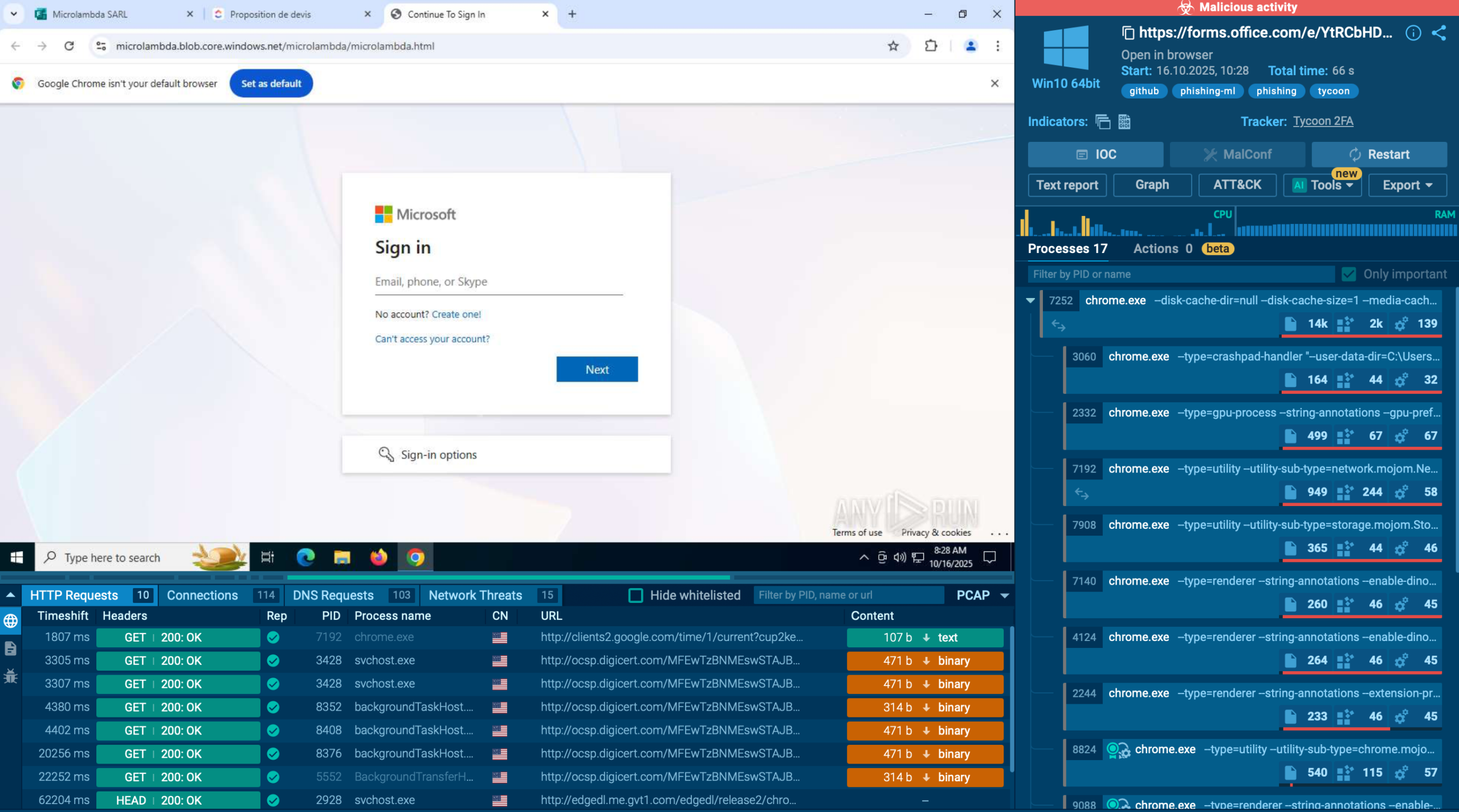
ANY.RUN’s sandbox exposing full attack chain in 60 seconds
Result: 3× higher investigation efficiency, fewer false positives, and faster response with far less analyst stress.
Cut through investigation noise and give your team the context they need to act with confidence
Step 2: Automate the Routine Without Losing Human Control
Many SOCs still lose too much time on repetitive work; copying IOCs, updating tickets, and checking the same indicators across multiple tools. It doesn’t strengthen defense; it just wears analysts down.
The solution: Use automation for routine actions while keeping human control over real decisions. Modern threats rely on clicks, redirects, CAPTCHAs, and QR codes, so automation must handle these steps too. ANY.RUN’s automated interactivity follows these paths automatically and lets analysts step in when needed.
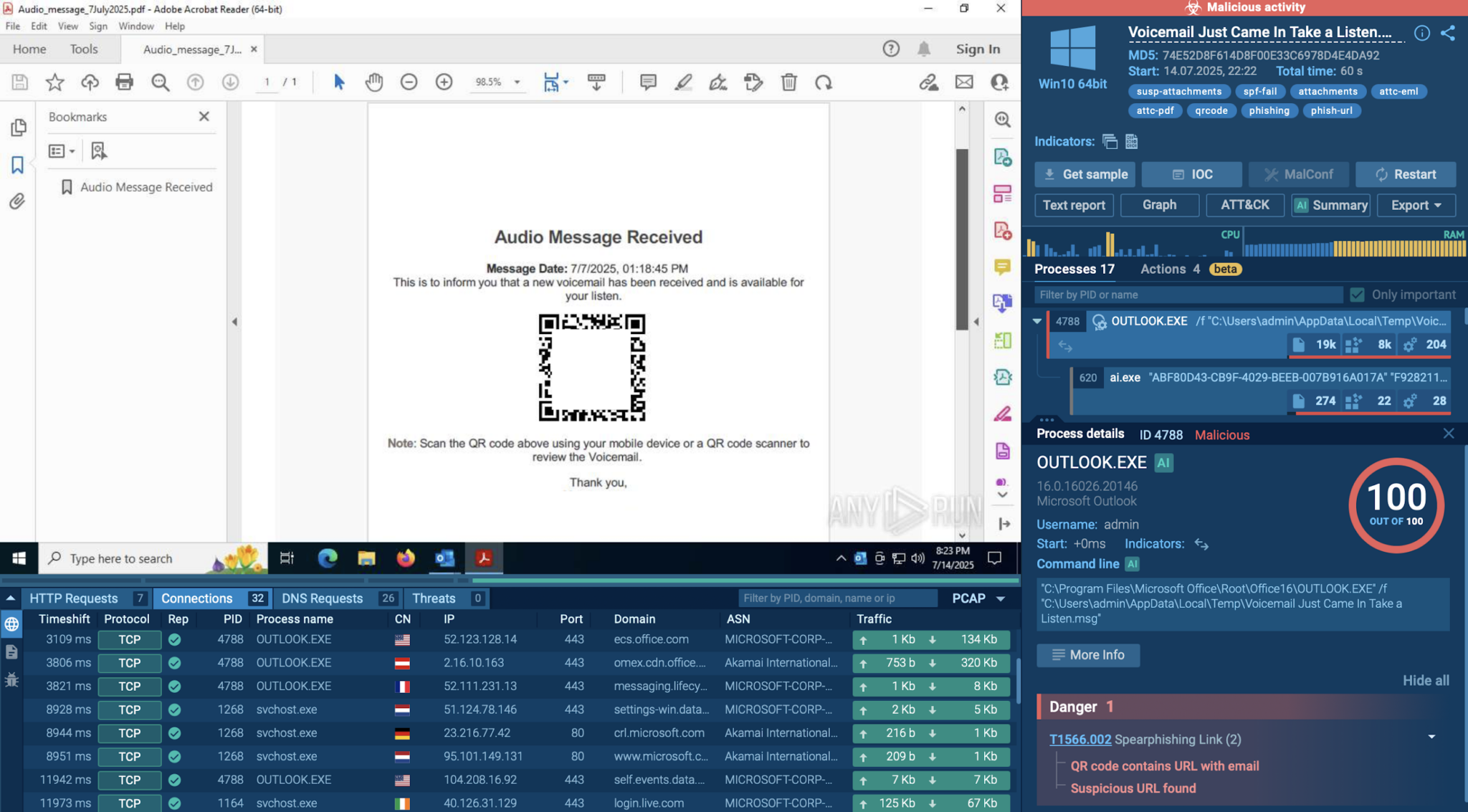
ANY.RUN detects the malicious link hidden inside QR code in 60 seconds
Result: Faster uncovering of complex threats, more cases resolved at Tier 1, 20% lower Tier 1 workload, and 30% fewer Tier 1 → Tier 2 escalations.
Step 3: Create a Unified Response Workflow
In many SOCs, investigations unfold across several disconnected tools; one for alerts, another for notes, another for reports. As a result, analysts repeat work, handoffs get missed, and important details end up buried in chat threads. This lack of coordination slows response and adds unnecessary pressure to already overloaded teams.
The solution: Create a single workflow where managers can assign tasks, follow investigation progress, and keep every case organized from start to finish. When work happens in one place, it’s easier to see who owns what, what’s already been done, and where attention is needed next.

How the team is managed in ANY.RUN
Solutions like ANY.RUN offer this kind of structure by letting leads distribute cases, monitor analyst activity, and review findings without jumping between systems. The goal is simple: remove the chaos of scattered workflows and give teams a clearer path through each investigation.
Result: Better handoffs, no duplicated work, clearer ownership, and a smoother, more predictable investigation flow.
Improve SOC Efficiency Without Burning Out Your Team
Alert fatigue grows when analysts work with scattered data, repetitive manual tasks, and workflows that pull their attention in too many directions. But CISOs can reverse that trend by improving visibility, automating routine steps, using real-time intelligence, and creating a unified path for each investigation. When the system carries more of the load, analysts stay sharper, cases move faster, and the SOC becomes more resilient overall.
Talk to ANY.RUN experts to explore how your team can reduce overload and protect analyst capacity.
Join our LinkedIn group Information Security Community!