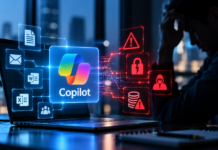




Deploying new automation has been the easy part for most enterprises over the past two years. Deciding what those systems are allowed to touch has not kept pace. Gartner now reports that 54% of organizations have no defined approach to limit artificial intelligence (AI) agent access. A Dark Reading feature that gathered Gartner’s and Omdia’s 2027 predictions casts that gap as a critical focus heading into 2027.
AI Agents Are Already Acting, and 54% Go Unscoped
Companies spent 2026 deploying AI at record speed, and executives urged staff to use the new tools. The harder task is here now: proving the technology can be governed, secured, and shown to be worth the spend. Omdia, the technology research firm owned by Informa, and Gartner both call that shift the defining AI security test of 2027.
The money keeps the pressure on. Omdia found that 59% of organizations expect their AI budgets to rise by 10% or more in 2027. Spending will be judged on return on investment (ROI) and productivity gains rather than technical superiority. Melinda Marks, practice director of cybersecurity at Omdia, told Dark Reading that security teams must become enablers of safe adoption. That means protecting data, setting guardrails for access and usage, and securing a software supply chain that grows more tangled as AI spreads.
Why an AI Agent Does Not Need AGI to Cause Damage
The governance gap is no longer theoretical. Autonomous agents are already acting inside enterprise systems. Gartner put the point plainly in the research it shared: “An AI system does not need to achieve artificial general intelligence capabilities to create significant cyber risk.” It only needs the ability to affect enterprise operations, the firm wrote. Reports of OpenAI and Anthropic agents operating on their own have fed a debate about slowing development. Yet the risk in most enterprises is simpler: agents hold standing access, and no one has scoped what they can touch.
That is where the 54% figure bites. In our reading, the exposure is not the sophistication of any single agent but the blast radius an unscoped one carries. Gartner’s advice follows the same logic: govern agents by action privileges, so a compromised one reaches only what its job requires. Its agentic-AI oversight guidance frames the same AI governance problem as shadow AI, the automations employees spin up without security seeing them. In one 2026 Gartner survey, 76% of chief information security officers (CISOs) ranked AI-driven vulnerability discovery among their top 10 emerging risks.
Scope AI Agent Access Before 2027
Inventory and scope agent access as a privileged action – Gartner’s 54% gap starts with agents no one has mapped. Build risk profiles that document each agent’s permissions and data reach, then limit the highest-autonomy agents first.
Rebuild identity checks for a deepfake era – Gartner now calls deepfakes, AI-generated video or audio impersonations, a “mainstream” threat. Attackers including nation-states use them to pose as executives or IT staff. Pair deepfake detection with contextual signals such as device location and IP address.
Treat supply chain security as a standing condition – Omdia argues firms “can no longer assume disruption will end and supply chains will return to normal.” Keep a tested plan to resume operations when a dependency breaks. The cybercriminal group TeamPCP showed the stakes, targeting versions of LiteLLM, an open-source library used to build AI applications, and triggering widespread credential theft.
The autonomous agents are already running on enterprise networks. The AI security test for 2027 turns on what they are allowed to reach. Scoping that access is the work Gartner and Omdia both put at the center of the year ahead. The firms that do it will spend less of 2027 explaining what an unscoped agent reached on its own.
Join our LinkedIn group Information Security Community!