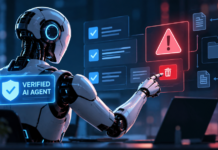





Online meetings have become an essential part of modern professional life, enabling organizations to communicate, collaborate, and make decisions efficiently, especially after the Covid 19 crisis. However, the increasing use of virtual meeting platforms and AI-powered tools has introduced security and privacy risks, including unauthorized access, data leakage, deepfake impersonation, malicious content, and misuse of confidential information. In this context, AI guardrails play a crucial role in strengthening online meeting security by ensuring that AI systems operate within defined security, privacy, and ethical boundaries.
Understanding AI Guardrails
AI guardrails are technical controls, policies, and safeguards designed to prevent artificial intelligence systems from performing unsafe, unauthorized, or inappropriate actions. In online meetings, they help regulate how AI assistants’ access, process, store, and share meeting information.
For example, an AI assistant may be permitted to summarize a discussion but prevented from sharing the summary with unauthorized participants. These safeguards help organizations use AI-powered meeting tools responsibly while protecting sensitive information.
Key Security Risks in Online Meetings
Online meetings face several security challenges. Unauthorized participants may join meetings using compromised credentials or stolen links. Confidential information contained in recordings, transcripts, and summaries may be exposed through inadequate access controls.
Deepfake technology can enable attackers to impersonate executives or colleagues, potentially facilitating fraud. Additionally, malicious instructions embedded in chat messages or shared documents may manipulate AI assistants into disclosing information or performing unauthorized actions.
Addressing these threats requires a combination of traditional cybersecurity measures and AI-specific safeguards.
How AI Guardrails Strengthen Security
1. Enforcing identity verification and access controls- AI guardrails can complement authentication systems by identifying suspicious activity, enforcing participant permissions, and restricting AI assistants to authorized meetings. These measures should work alongside multi-factor authentication, meeting passwords, and role-based access controls.
2. Preventing data leakage- Guardrails can restrict access to confidential information, redact sensitive personal data, and prevent unauthorized sharing of transcripts or recordings. Integrated data loss prevention controls further help organizations protect business-critical information.
3. Detecting deepfake impersonation- AI-based detection systems can flag suspicious audio, video, or behavioral signals that may indicate impersonation. However, these systems are not always reliable. Independent identity verification and confirmation through trusted communication channels remain essential, particularly before approving financial transactions or sharing sensitive information.
4. Protecting against prompt injection- Malicious instructions embedded in meeting chats, documents, or transcripts may attempt to manipulate AI assistants. Guardrails can help by treating such content as untrusted input, limiting system permissions, and requiring authorization before sensitive actions are performed.
5. Securing recordings and transcripts- AI guardrails can enforce appropriate encryption, access restrictions, data retention periods, and secure deletion procedures. They can also ensure that AI-generated summaries and action items are shared only with approved recipients.
6. Supporting compliance- Organizations can apply different security policies according to meeting sensitivity. For example, confidential board meetings may prohibit external AI assistants, while approved enterprise tools may operate under stricter permissions and monitoring requirements.
Best Practices for Implementation
Organizations should establish clear policies governing AI usage, restrict AI assistants to the minimum permissions necessary, and enforce strong authentication and access management. They should protect meeting data throughout its lifecycle through encryption, retention controls, and secure deletion.
Human oversight is particularly important for sensitive decisions, financial transactions, and external disclosures. Regular security assessments, prompt-injection testing, employee awareness programs, and continuous monitoring can help identify weaknesses and improve protection.
Challenges and Limitations
AI guardrails cannot guarantee complete security. AI systems may misinterpret information, generate inaccurate summaries, or fail to detect sophisticated attacks. Excessively restrictive controls can also disrupt legitimate workflows. Organizations must therefore balance security, usability, privacy, and regulatory compliance.
AI guardrails should be implemented as one component of a broader defense-in-depth strategy that includes conventional cybersecurity controls, employee training, and incident-response procedures.
Conclusion
AI guardrails are becoming increasingly important as artificial intelligence transforms online collaboration. By controlling access, protecting confidential information, limiting unauthorized actions, and supporting compliance, they help organizations reduce security risks associated with virtual meetings.
Their effectiveness depends on thoughtful implementation and integration with established security practices. The goal is not merely to secure the meeting connection, but also to govern the AI systems operating within it. With appropriate guardrails and human oversight, organizations can benefit from AI-powered collaboration while maintaining the confidentiality, integrity, and trust essential to secure communication.
Join our LinkedIn group Information Security Community!