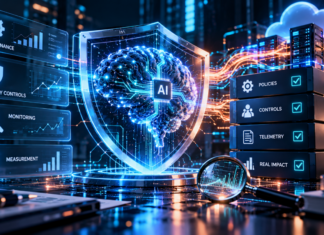





Artificial intelligence agents are rapidly changing the cybersecurity landscape. Unlike traditional AI models that primarily generate or classify information, AI agents can interpret instructions, access tools, interact with applications, retrieve data and execute actions. This creates a new attack surface in which malicious content can potentially influence an agent’s behavior.
Interestingly, video-based content may present a different—and in some contexts, narrower—risk profile than highly structured text, code or machine-readable data.
One reason is actionability. AI agents often work with content that can be directly interpreted as instructions, commands, links, code, API parameters or workflow inputs. Text is particularly convenient for this because it can be copied, parsed and passed directly to another system.
Video, by contrast, generally requires additional processing such as speech recognition, optical character recognition (OCR), image analysis or multimodal interpretation before its contents become actionable.
This additional processing layer can create friction for an attack. A malicious instruction hidden inside a video frame, for example, may not automatically become an executable command. The agent must first perceive and interpret the visual or audio content. This can reduce some forms of prompt injection, instruction hijacking and automated exploitation—although it certainly does not eliminate them.
Another factor is machine readability. Structured text and code can contain precise syntax that computers can immediately process. Videos are usually less deterministic. A human viewer may understand a malicious message embedded in a video, but an AI agent may require several interpretation steps before reaching the same conclusion. That distinction can matter when an attacker is attempting to manipulate an autonomous workflow.
However, those who are into video content generation should not be considered inherently safe. Modern multimodal AI agents can analyze video, understand speech, read text appearing on screens and identify objects or events. Attackers can therefore explore techniques such as adversarial visual content, hidden instructions, malicious subtitles, manipulated audio and multimodal prompt injection.
The security challenge becomes even greater when an AI agent is permitted to take actions based on what it sees or hears, automatically. For example, an agent monitoring training videos, security footage or customer-generated content could potentially be manipulated into making incorrect classifications or triggering inappropriate workflows.
Organizations should therefore adopt a content-aware AI security strategy rather than assuming that one media format is safer than another. Controls such as input sanitization, content provenance, least-privilege access, human approval for high-impact actions, sandboxing and continuous monitoring can reduce the risk.
Ultimately, video may have a different attack surface, rather than a smaller one. As AI agents become increasingly capable of understanding video natively, the security industry will need to treat visual and audiovisual data as potential sources of both information and instruction.
The key lesson is simple: security should be based on what an AI agent can do with content—not merely on whether that content is text, audio or video.
Join our LinkedIn group Information Security Community!