
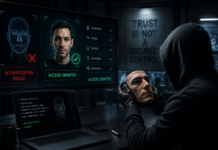

Water utilities have become increasingly attractive targets for cybercriminals and state-sponsored threat actors as the sector adopts connected technologies to improve efficiency, automate operations and remotely manage critical infrastructure. While digital transformation offers significant operational benefits, it also creates new attack surfaces that adversaries can exploit to disrupt water treatment, distribution and other essential services.
A successful cyberattack against a water utility could have consequences extending far beyond compromised computers or stolen information. Attackers who gain access to operational technology (OT) environments could potentially interfere with pumps, valves, treatment processes, chemical controls and other systems responsible for delivering safe and reliable water. This makes cybersecurity a critical component of public safety and infrastructure resilience.
One of the biggest challenges facing water utilities is the convergence of traditional IT networks with OT and industrial control systems (ICS). Many utilities also rely on remote-access technologies that allow employees and contractors to monitor or manage equipment from outside the facility. If these connections are inadequately secured, attackers may use compromised credentials, vulnerable remote-access services or exposed devices as an entry point into critical systems.
To reduce this risk, water utilities should begin with strong network segmentation. Critical OT environments should be separated from corporate IT networks and the public internet wherever possible. Security controls should restrict communication between different network segments and prevent a compromise of an employee workstation from automatically spreading to operational systems.
Multi-factor authentication (MFA) should also be implemented, particularly for remote access and privileged accounts. Stolen usernames and passwords remain among the most common methods used by attackers to gain an initial foothold. Requiring an additional authentication factor can significantly reduce the risk associated with compromised credentials.
Utilities should also maintain a detailed inventory of their connected assets. Organizations cannot adequately protect systems they do not know exist. Regularly identifying internet-facing devices, programmable logic controllers, engineering workstations, remote-access systems and other OT assets can help security teams identify vulnerabilities and eliminate unnecessary exposure.
Patch management is another important defense. Although applying security updates to industrial systems can be challenging because some equipment cannot easily be taken offline, utilities should establish risk-based processes for addressing known vulnerabilities. Where immediate patching is not possible, compensating controls such as network isolation, access restrictions and enhanced monitoring should be considered.
Continuous monitoring is equally important. Security teams should watch for unusual login activity, unauthorized configuration changes, unexpected network communications and abnormal behavior within OT environments. Early detection can give operators valuable time to isolate compromised systems before an incident develops into a larger operational disruption.
Finally, cybersecurity cannot depend entirely on technology. Water utilities should regularly conduct incident-response exercises involving IT personnel, plant operators, management and external partners. Backups of critical systems should be maintained offline or otherwise protected from ransomware, and recovery procedures should be tested to ensure that essential services can be restored quickly.
The cybersecurity challenge facing water utilities is likely to grow as more infrastructure becomes connected and remotely managed. By combining network segmentation, strong authentication, asset visibility, vulnerability management, continuous monitoring and tested recovery plans, utilities can significantly improve their resilience against cyberattacks.
For water providers, cybersecurity is no longer simply an IT responsibility. It is an essential part of protecting public health, maintaining operational continuity and ensuring that one of society’s most fundamental services remains available when it is needed most.
Join our LinkedIn group Information Security Community!